⚠️ Mobile support is not actively supported for school things ⚠️

Country Mention Networks in UN Speeches

Computational Social Science 02467 - Group 10

The analysis is based on the United Nations General Debate Corpus (UNGDC), which contains speeches delivered by countries at the United Nations over multiple decades. Each observation consists of a speech, a country, and a year, making it possible to connect political language with both countries and time.

This makes the dataset especially useful for studying:

  • international attention patterns
  • political communication
  • diplomatic relationships
  • sentiment in international discourse

Dataset: UN General Debate Corpus (UNGDC)

  • Years covered: 1970-2015
  • Speeches: 7507
  • Countries: 199 unique countries
  • Main variables:
    year countries speech text

How the Network Works

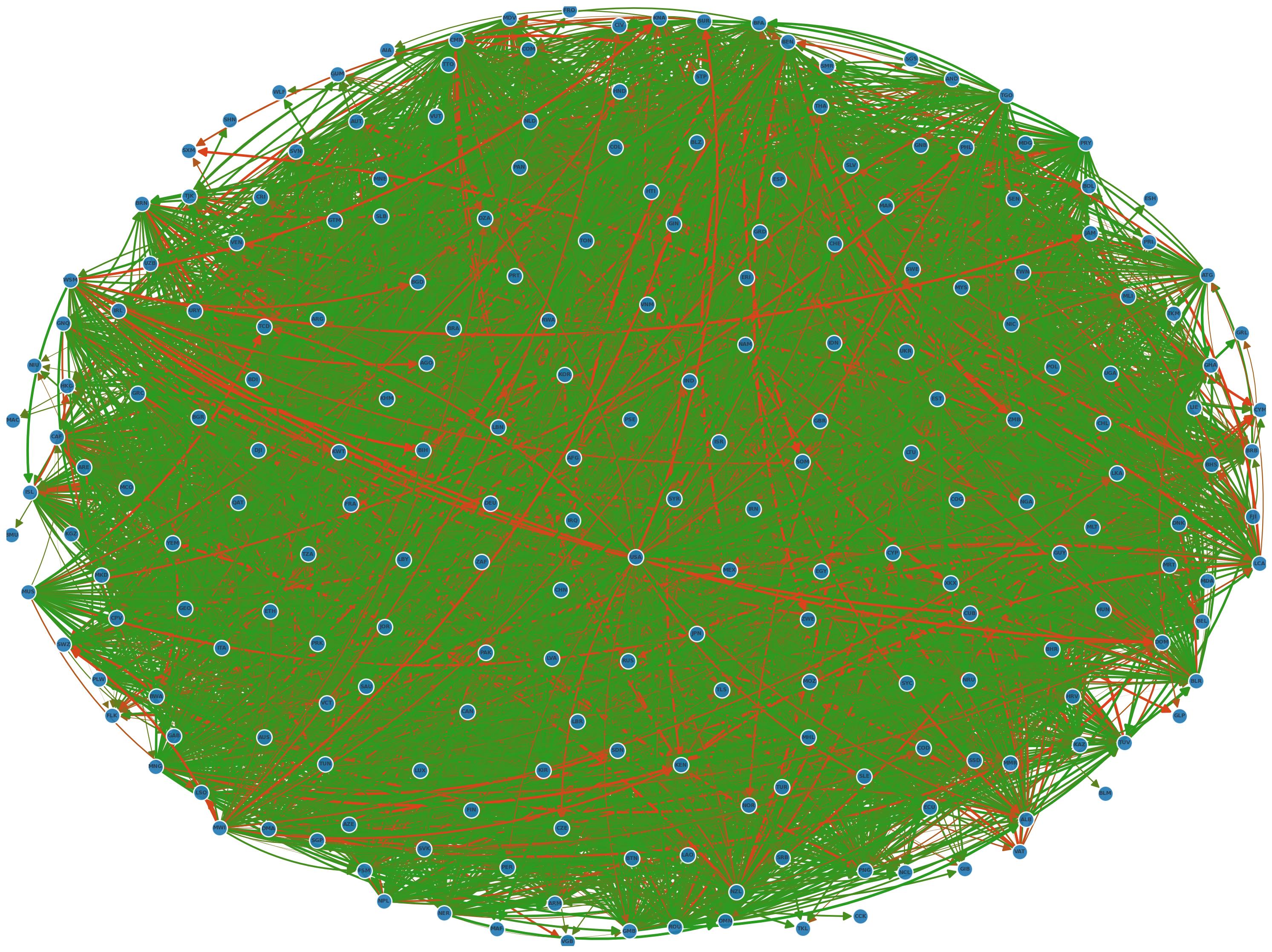
In this project, countries are treated as nodes, while mentions from one country to another form directed edges. A directed edge means that one country refers to another in a speech. The direction matters, because diplomatic attention is not necessarily symmetric: a country may talk about another country much more than it is talked about in return.

Edge color reflects whether the mention is framed in a more positive or negative way. This allows the network to capture both the volume and the tone of diplomatic attention.

  • Node: a country
  • Directed edge: one country mentions another
  • Edge weight: how often the mention occurs
  • Edge color: whether the mention is more positive or more negative
Full Network Overview

The graph below shows the full diplomatic mention network built from the UN speeches. Each node represents a country, and each directed edge represents one country mentioning another. Edge color reflects whether the mention is framed in a more positive or more negative way. Users can adjust the positive and negative sliders to filter the graph by sentiment strength. Because the full graph contains a very large number of connections, it provides a useful overview of how dense and interconnected international political discourse is, but it is too crowded for detailed country level interpretation.

Negative range
Positive range
-1
0
1
-1.0 --- -0.0
0.0 --- 1.0
Explore Country Level Relationships
To make the network easier to explore in more detail, the website also includes filtered interactive graphs. Here, users can select a country and examine both how that country talks about others and how others talk about that country. Users can also zoom in, zoom out, and move nodes around to inspect the network more closely. This makes it easier to compare outgoing and incoming diplomatic attention, while also showing whether these references are framed more positively or negatively.
List of interactive graphs
The interactive graphs has to be filtered, due to the large amount of connections, making a full interactive graph, requires too much processing power.
Filter by region:
Asia
Europe
Africa
North America
Oceania
South America
Antarctica
CountryISO3From buttonsTowards buttons
AfghanistanAFG
AngolaAGO
AlbaniaALB
AndorraAND
United Arab EmiratesARE
ArgentinaARG
ArmeniaARM
Antigua and BarbudaATG
AustraliaAUS
AustriaAUT
AzerbaijanAZE
BurundiBDI
BelgiumBEL
BeninBEN
Burkina FasoBFA
BangladeshBGD
BulgariaBGR
BahrainBHR
BahamasBHS
Bosnia and HerzegovinaBIH
BelarusBLR
BelizeBLZ
BoliviaBOL
BrazilBRA
BarbadosBRB
BruneiBRN
BhutanBTN
BotswanaBWA
Central African RepublicCAF
CanadaCAN
SwitzerlandCHE
ChileCHL
ChinaCHN
Ivory CoastCIV
CameroonCMR
Democratic Republic of the CongoCOD
Republic of the CongoCOG
ColombiaCOL
ComorosCOM
Cape VerdeCPV
Costa RicaCRI
CzechoslovakiaCSK
CubaCUB
CyprusCYP
Czech RepublicCZE
German Democratic RepublicDDR
GermanyDEU
DjiboutiDJI
DominicaDMA
DenmarkDNK
Dominican RepublicDOM
AlgeriaDZA
EcuadorECU
EgyptEGY
EritreaERI
SpainESP
EstoniaEST
EthiopiaETH
European UnionEU
FinlandFIN
FijiFJI
FranceFRA
MicronesiaFSM
GabonGAB
United KingdomGBR
GeorgiaGEO
GhanaGHA
GuineaGIN
GambiaGMB
Guinea-BissauGNB
Equatorial GuineaGNQ
GreeceGRC
GrenadaGRD
GuatemalaGTM
GuyanaGUY
HondurasHND
CroatiaHRV
HaitiHTI
HungaryHUN
IndonesiaIDN
IndiaIND
IrelandIRL
IranIRN
IraqIRQ
IcelandISL
IsraelISR
ItalyITA
JamaicaJAM
JordanJOR
JapanJPN
KazakhstanKAZ
KenyaKEN
KyrgyzstanKGZ
CambodiaKHM
KiribatiKIR
Saint Kitts and NevisKNA
South KoreaKOR
KuwaitKWT
LaosLAO
LebanonLBN
LiberiaLBR
LibyaLBY
Saint LuciaLCA
LiechtensteinLIE
Sri LankaLKA
LesothoLSO
LithuaniaLTU
LuxembourgLUX
LatviaLVA
MoroccoMAR
MonacoMCO
MoldovaMDA
MadagascarMDG
MaldivesMDV
MexicoMEX
Marshall IslandsMHL
MacedoniaMKD
MaliMLI
MaltaMLT
MyanmarMMR
MontenegroMNE
MongoliaMNG
MozambiqueMOZ
MauritaniaMRT
MauritiusMUS
MalawiMWI
MalaysiaMYS
NamibiaNAM
NigerNER
NigeriaNGA
NicaraguaNIC
NetherlandsNLD
NorwayNOR
NepalNPL
NauruNRU
New ZealandNZL
OmanOMN
PakistanPAK
PanamaPAN
PeruPER
PhilippinesPHL
PalauPLW
Papua New GuineaPNG
PolandPOL
North KoreaPRK
PortugalPRT
ParaguayPRY
Palestinian TerritoryPSE
QatarQAT
RomaniaROU
RussiaRUS
RwandaRWA
Saudi ArabiaSAU
SudanSDN
SenegalSEN
SingaporeSGP
Solomon IslandsSLB
Sierra LeoneSLE
El SalvadorSLV
San MarinoSMR
SomaliaSOM
South SudanSSD
Sao Tome and PrincipeSTP
SurinameSUR
SlovakiaSVK
SloveniaSVN
SwedenSWE
SwazilandSWZ
SeychellesSYC
SyriaSYR
ChadTCD
TogoTGO
ThailandTHA
TajikistanTJK
TurkmenistanTKM
East TimorTLS
TongaTON
Trinidad and TobagoTTO
TunisiaTUN
TurkeyTUR
TuvaluTUV
TanzaniaTZA
UgandaUGA
UkraineUKR
UruguayURY
United StatesUSA
UzbekistanUZB
VaticanVAT
Saint Vincent and the GrenadinesVCT
VenezuelaVEN
VietnamVNM
VanuatuVUT
SamoaWSM
People's Democratic Republic of YemenYDYE
YemenYEM
YugoslaviaYUG
South AfricaZAF
ZambiaZMB
ZimbabweZWE
Main findings
Our analysis suggests that diplomatic attention in UN speeches is unevenly distributed across countries. A smaller number of countries appear much more frequently in international discourse, while many others are mentioned less often. In the network, countries such as the United States, China, and Russia stand out as especially visible actors, which suggests that global political attention is concentrated around a limited set of highly prominent states.
The country level graphs also show that diplomatic attention is directional rather than balanced. Some countries appear to direct attention broadly toward many others, while some are more prominent as targets of discussion. For example, the United States appears as a country with broad outgoing attention, while China and Russia also emerge as major targets of incoming attention from other countries. This shows that centrality in the network can reflect different roles: a country may be highly active in talking about others, highly visible as a topic of discussion, or both.
Another important pattern is that international political discourse is not purely positive or purely negative. The sentiment based graphs suggest that the same country can receive both supportive and critical references depending on who is speaking and in what context. This is especially visible for countries like the United States, China, and Russia, which appear in a mix of positive and negative relationships rather than fitting into a single simple category. This highlights the complexity of diplomatic language, where cooperation, criticism, and strategic concern can exist at the same time.
The filtered graphs also make it easier to compare large, globally central actors with smaller or more selective ones. For example, the Vatican appears much less densely connected than countries such as the United States, China, or Russia. This suggests a more selective pattern of diplomatic attention, where some actors are present in the network but do not occupy the same broad, central role as major geopolitical powers.
Taken together, these findings suggest that UN speeches reveal more than isolated political statements. They reflect a larger structure of global diplomatic attention in which a small number of countries occupy especially central positions, while others appear in more limited or specialized ways. By combining mention frequency with positive and negative framing, the network provides a more nuanced picture of how countries are represented in international discourse.
Example of China’s outgoing vs incoming diplomatic attention
Interactive
© 2023-2025
BOT Alex
Benjamin Dreyer
Snorre Ettrup Altschul

Info

This website was made using SvelteKit logo
Website source code
Last build: 22.05.2026, 14.34 (+2 UTC)